| Here is a list of some of the Flag Flying Days in the UK for 2014. | ||
| Date | Occasion | Flag to fly |
| January 20th | Birthday of HRH The Countess of Wessex | Union Flag |
| January 26th | Australia day | Australian Flag |
| February 6th | Her Majesty's Accession | Union Flag |
| February 8th | New Zealand Commonwealth Day | New Zealand Flag |
| February 19th | Birthday of Prince Andrew | Union Flag |
| March 1st | St David's Day (Wales only) | Wales, Red Dragon Flag |
| March (2nd Monday) | Commonwealth Day | Union Flag |
| March 10th | Birthday of the Earl of Wessex | Union Flag |
| March 17th | St. Patrick's Day | St. Patrick's Cross |
| April 21st | Birthday of Her Majesty The Queen | Union Flag |
| April 23rd | St. George's Day (England only) | England, St. George Flag |
| May 5th | Europe Day | EEC Flag |
| June 2nd | Coronation Day | Union Flag |
| June (as appointed) | Official celebration of her Majesty's The Queens Birthday | Union Flag |
| June 20th | Birthday of The Duke of Edinburgh | Union Flag |
| June 21st | Birthday of Prince William | Union Flag |
| June 29th | Armed Forces Day | Armed Forces Day Flag |
| July 1st | Canada Day | Canadian Flag |
| July 4th | USA Independence Day | USA, Stars and Stripes Flag |
| July 14th | Bastille Day | French Flag |
| July 22nd | Birthday of Prince George | Union Flag |
| August 15th | Birthday of Princess Anne | Union Flag |
| September 15th | Birthday of Prince Harry | Union Flag |
| October 21st | Trafalgar Day | Union Flag |
| October 24th | United Nations Day | UN Flag |
| November (2nd Sunday) | Rememberance Day | Union Flag |
| November 14th | Birthday of The prince of Wales | Union Flag |
| November 20th | Her Majesty's Wedding Anniversary | Union Flag |
| November 30th | St. Andrews Day (Scotland) | Saltire, St. Andrews Flag |
Tuesday, 7 January 2014
Flag Flying days 2014


Friday, 7 December 2012
Bunting Bunting and more Bunting
Bunting: a quick guide
Bunting really is the ultimate celebratory decoration, from Jubilee's to Christmas there is bunting for every occassion. The question is which style of bunting do you go for?
 PVC, the same material banners are made from, quick to print and easily customisable for your brand. On small runs it tends to be expensive on higher quantaties this is your perfect match

Pre-fabricated option, makes for a low cost on smaller quantities, however you are stuck when it comes to design, only 2 held in stock.

Polflex offers a cheap solution in the bunting world, if you are after plain colours then this is it really. They can be customised with vinyl grpahics / lettering, however this then becomes labour intensive and the Polyflex doesn't become the cheapest option. However it does make for great cheap red, white and blue style bunting.

Liven up any event in an eco friendly way, this material is made from ripstock recycled nylon bunting. It does mean the number of options is down to what comes to us, but if you are looking for a great eco alternative this is for you.
Bunting really is the ultimate celebratory decoration, from Jubilee's to Christmas there is bunting for every occassion. The question is which style of bunting do you go for?
Pre-fabricated option, makes for a low cost on smaller quantities, however you are stuck when it comes to design, only 2 held in stock.
Polflex offers a cheap solution in the bunting world, if you are after plain colours then this is it really. They can be customised with vinyl grpahics / lettering, however this then becomes labour intensive and the Polyflex doesn't become the cheapest option. However it does make for great cheap red, white and blue style bunting.
Liven up any event in an eco friendly way, this material is made from ripstock recycled nylon bunting. It does mean the number of options is down to what comes to us, but if you are looking for a great eco alternative this is for you.
Monday, 1 October 2012
Should I get a single sided or double sided flag?
Should I have a single sided or double sided flag? This is one of the more frequent questions that we encounter. First of all let’s start by explaining them.
Single sided flags
A single sided flag is exactly that. Printed on one side, but what a lot of people don’t expect is that the design is mirror imaged onto the reverse of the flag. This means your design can be viewed from both sides.
Double sided flags
A double sided flag is essentially two flags sewn together with a blanking sheet in the middle to stop show through.
So why would you choose a single sided flag over a double sided flag and vice a versa?
90% of the orders we receive are for single sided flags. Double sided flags sound like a great idea, but in reality there are some drawbacks. The way double sided flags are made (two flags sewn together with a blanking sheet in the middle), mean they tend to turn out very heavy and unfortunately don’t fly as well as a single sided flag. The other drawback is that they are quite expensive! Double flags do look great but because of these drawbacks they are probably not the best choice for the majority of people.

Single sided flags
A single sided flag is exactly that. Printed on one side, but what a lot of people don’t expect is that the design is mirror imaged onto the reverse of the flag. This means your design can be viewed from both sides.
Double sided flags
A double sided flag is essentially two flags sewn together with a blanking sheet in the middle to stop show through.
So why would you choose a single sided flag over a double sided flag and vice a versa?
90% of the orders we receive are for single sided flags. Double sided flags sound like a great idea, but in reality there are some drawbacks. The way double sided flags are made (two flags sewn together with a blanking sheet in the middle), mean they tend to turn out very heavy and unfortunately don’t fly as well as a single sided flag. The other drawback is that they are quite expensive! Double flags do look great but because of these drawbacks they are probably not the best choice for the majority of people.
Monday, 17 September 2012
The Queen’s Diamond Jubilee, Olympics and Paralympics are over....What’s next?
I’ll start off by saying what an amazing year it has been so far. A good old fashioned national celebration for Her Majesty The Queen’s Diamond Jubilee where communities were united at street parties, followed by an absolutely fantastic Olympic and Paralympics games in London where Team GB and Paralympics GB did the whole country proud. As Flags, Flagpoles and Bunting suppliers it was fantastic to see so many people supporting the nation with Team GB flags, Union Flags and decorating their street parties with bunting. With such a great start and middle to the year let’s keep the Flag flying going all year round! Halloween Flags and yes the dreaded “C” word....Christmas flags are now on sale.
I’ll start off by saying what an amazing year it has been so far. A good old fashioned national celebration for Her Majesty The Queen’s Diamond Jubilee where communities were united at street parties, followed by an absolutely fantastic Olympic and Paralympics games in London where Team GB and Paralympics GB did the whole country proud. As Flags, Flagpoles and Bunting suppliers it was fantastic to see so many people supporting the nation with Team GB flags, Union Flags and decorating their street parties with bunting. With such a great start and middle to the year let’s keep the Flag flying going all year round! Halloween Flags and yes the dreaded “C” word....Christmas flags are now on sale.
Wednesday, 12 September 2012
Our Olympic memories
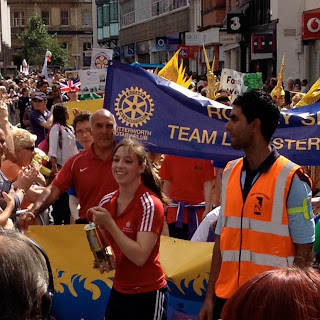
Here are a few pictures we've taken from our various trips to watch the London 2012 Olympics and Paralympics.




Tuesday, 28 February 2012
We've been printing feather Flags
We've had a busy week of printing feather flags, here a just a few examples of what we've done.
 |
| Feather flags |
Thursday, 5 January 2012
Flag Hoisting days 2012
Here are just a few key flag hoisting dates for your diary
9th January – Birthday of the Duchess of Cambridge
20th January – Birthday of the Countess of Wessex
6th February – Her Majesty’s Accession
19th February – Birthday of the Duke of York
1st March – St David’s Day (Wales)
10th March – Birthday of the Earl of Wessex
12th March – Commonwealth Day
17th March – St. Patrick’s Day
21st April – Birthday of Her Majesty the Queen
23rd April – St George’s Day (England)
9th May – Europe Day
2nd June – Coronation Day
10th June – Birthday of the Duke of Edinburgh
16th June – Official Celebration of Her Majesty’s Birthday
21st June – Birthday of the Duke of Cambridge
17th July – Birthday of the Duchess of Cornwall
15th August – Birthday of the Princess Royal
11th November – Remembrance day
14th November – Birthday of the Prince of Wales
20th November – Her Majesty’s Wedding Day
30th November – St Andrew’s Day (Scotland)

9th January – Birthday of the Duchess of Cambridge
20th January – Birthday of the Countess of Wessex
6th February – Her Majesty’s Accession
19th February – Birthday of the Duke of York
1st March – St David’s Day (Wales)
10th March – Birthday of the Earl of Wessex
12th March – Commonwealth Day
17th March – St. Patrick’s Day
21st April – Birthday of Her Majesty the Queen
23rd April – St George’s Day (England)
9th May – Europe Day
2nd June – Coronation Day
10th June – Birthday of the Duke of Edinburgh
16th June – Official Celebration of Her Majesty’s Birthday
21st June – Birthday of the Duke of Cambridge
17th July – Birthday of the Duchess of Cornwall
15th August – Birthday of the Princess Royal
11th November – Remembrance day
14th November – Birthday of the Prince of Wales
20th November – Her Majesty’s Wedding Day
30th November – St Andrew’s Day (Scotland)


Subscribe to:
Posts (Atom)