| Here is a list of some of the Flag Flying Days in the UK for 2014. | ||
| Date | Occasion | Flag to fly |
| January 20th | Birthday of HRH The Countess of Wessex | Union Flag |
| January 26th | Australia day | Australian Flag |
| February 6th | Her Majesty's Accession | Union Flag |
| February 8th | New Zealand Commonwealth Day | New Zealand Flag |
| February 19th | Birthday of Prince Andrew | Union Flag |
| March 1st | St David's Day (Wales only) | Wales, Red Dragon Flag |
| March (2nd Monday) | Commonwealth Day | Union Flag |
| March 10th | Birthday of the Earl of Wessex | Union Flag |
| March 17th | St. Patrick's Day | St. Patrick's Cross |
| April 21st | Birthday of Her Majesty The Queen | Union Flag |
| April 23rd | St. George's Day (England only) | England, St. George Flag |
| May 5th | Europe Day | EEC Flag |
| June 2nd | Coronation Day | Union Flag |
| June (as appointed) | Official celebration of her Majesty's The Queens Birthday | Union Flag |
| June 20th | Birthday of The Duke of Edinburgh | Union Flag |
| June 21st | Birthday of Prince William | Union Flag |
| June 29th | Armed Forces Day | Armed Forces Day Flag |
| July 1st | Canada Day | Canadian Flag |
| July 4th | USA Independence Day | USA, Stars and Stripes Flag |
| July 14th | Bastille Day | French Flag |
| July 22nd | Birthday of Prince George | Union Flag |
| August 15th | Birthday of Princess Anne | Union Flag |
| September 15th | Birthday of Prince Harry | Union Flag |
| October 21st | Trafalgar Day | Union Flag |
| October 24th | United Nations Day | UN Flag |
| November (2nd Sunday) | Rememberance Day | Union Flag |
| November 14th | Birthday of The prince of Wales | Union Flag |
| November 20th | Her Majesty's Wedding Anniversary | Union Flag |
| November 30th | St. Andrews Day (Scotland) | Saltire, St. Andrews Flag |
Tuesday, 7 January 2014
Flag Flying days 2014


Friday, 7 December 2012
Bunting Bunting and more Bunting
Bunting: a quick guide
Bunting really is the ultimate celebratory decoration, from Jubilee's to Christmas there is bunting for every occassion. The question is which style of bunting do you go for?
 PVC, the same material banners are made from, quick to print and easily customisable for your brand. On small runs it tends to be expensive on higher quantaties this is your perfect match

Pre-fabricated option, makes for a low cost on smaller quantities, however you are stuck when it comes to design, only 2 held in stock.

Polflex offers a cheap solution in the bunting world, if you are after plain colours then this is it really. They can be customised with vinyl grpahics / lettering, however this then becomes labour intensive and the Polyflex doesn't become the cheapest option. However it does make for great cheap red, white and blue style bunting.

Liven up any event in an eco friendly way, this material is made from ripstock recycled nylon bunting. It does mean the number of options is down to what comes to us, but if you are looking for a great eco alternative this is for you.
Bunting really is the ultimate celebratory decoration, from Jubilee's to Christmas there is bunting for every occassion. The question is which style of bunting do you go for?
Pre-fabricated option, makes for a low cost on smaller quantities, however you are stuck when it comes to design, only 2 held in stock.
Polflex offers a cheap solution in the bunting world, if you are after plain colours then this is it really. They can be customised with vinyl grpahics / lettering, however this then becomes labour intensive and the Polyflex doesn't become the cheapest option. However it does make for great cheap red, white and blue style bunting.
Liven up any event in an eco friendly way, this material is made from ripstock recycled nylon bunting. It does mean the number of options is down to what comes to us, but if you are looking for a great eco alternative this is for you.
Monday, 1 October 2012
Should I get a single sided or double sided flag?
Should I have a single sided or double sided flag? This is one of the more frequent questions that we encounter. First of all let’s start by explaining them.
Single sided flags
A single sided flag is exactly that. Printed on one side, but what a lot of people don’t expect is that the design is mirror imaged onto the reverse of the flag. This means your design can be viewed from both sides.
Double sided flags
A double sided flag is essentially two flags sewn together with a blanking sheet in the middle to stop show through.
So why would you choose a single sided flag over a double sided flag and vice a versa?
90% of the orders we receive are for single sided flags. Double sided flags sound like a great idea, but in reality there are some drawbacks. The way double sided flags are made (two flags sewn together with a blanking sheet in the middle), mean they tend to turn out very heavy and unfortunately don’t fly as well as a single sided flag. The other drawback is that they are quite expensive! Double flags do look great but because of these drawbacks they are probably not the best choice for the majority of people.

Single sided flags
A single sided flag is exactly that. Printed on one side, but what a lot of people don’t expect is that the design is mirror imaged onto the reverse of the flag. This means your design can be viewed from both sides.
Double sided flags
A double sided flag is essentially two flags sewn together with a blanking sheet in the middle to stop show through.
So why would you choose a single sided flag over a double sided flag and vice a versa?
90% of the orders we receive are for single sided flags. Double sided flags sound like a great idea, but in reality there are some drawbacks. The way double sided flags are made (two flags sewn together with a blanking sheet in the middle), mean they tend to turn out very heavy and unfortunately don’t fly as well as a single sided flag. The other drawback is that they are quite expensive! Double flags do look great but because of these drawbacks they are probably not the best choice for the majority of people.
Monday, 17 September 2012
The Queen’s Diamond Jubilee, Olympics and Paralympics are over....What’s next?
I’ll start off by saying what an amazing year it has been so far. A good old fashioned national celebration for Her Majesty The Queen’s Diamond Jubilee where communities were united at street parties, followed by an absolutely fantastic Olympic and Paralympics games in London where Team GB and Paralympics GB did the whole country proud. As Flags, Flagpoles and Bunting suppliers it was fantastic to see so many people supporting the nation with Team GB flags, Union Flags and decorating their street parties with bunting. With such a great start and middle to the year let’s keep the Flag flying going all year round! Halloween Flags and yes the dreaded “C” word....Christmas flags are now on sale.
I’ll start off by saying what an amazing year it has been so far. A good old fashioned national celebration for Her Majesty The Queen’s Diamond Jubilee where communities were united at street parties, followed by an absolutely fantastic Olympic and Paralympics games in London where Team GB and Paralympics GB did the whole country proud. As Flags, Flagpoles and Bunting suppliers it was fantastic to see so many people supporting the nation with Team GB flags, Union Flags and decorating their street parties with bunting. With such a great start and middle to the year let’s keep the Flag flying going all year round! Halloween Flags and yes the dreaded “C” word....Christmas flags are now on sale.
Wednesday, 12 September 2012
Our Olympic memories
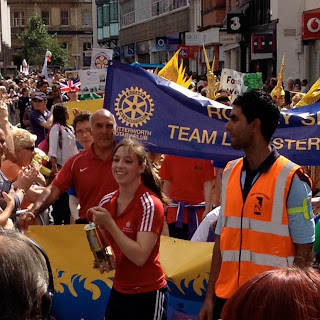
Here are a few pictures we've taken from our various trips to watch the London 2012 Olympics and Paralympics.




Tuesday, 28 February 2012
We've been printing feather Flags
We've had a busy week of printing feather flags, here a just a few examples of what we've done.
 |
| Feather flags |
Thursday, 5 January 2012
Flag Hoisting days 2012
Here are just a few key flag hoisting dates for your diary
9th January – Birthday of the Duchess of Cambridge
20th January – Birthday of the Countess of Wessex
6th February – Her Majesty’s Accession
19th February – Birthday of the Duke of York
1st March – St David’s Day (Wales)
10th March – Birthday of the Earl of Wessex
12th March – Commonwealth Day
17th March – St. Patrick’s Day
21st April – Birthday of Her Majesty the Queen
23rd April – St George’s Day (England)
9th May – Europe Day
2nd June – Coronation Day
10th June – Birthday of the Duke of Edinburgh
16th June – Official Celebration of Her Majesty’s Birthday
21st June – Birthday of the Duke of Cambridge
17th July – Birthday of the Duchess of Cornwall
15th August – Birthday of the Princess Royal
11th November – Remembrance day
14th November – Birthday of the Prince of Wales
20th November – Her Majesty’s Wedding Day
30th November – St Andrew’s Day (Scotland)

9th January – Birthday of the Duchess of Cambridge
20th January – Birthday of the Countess of Wessex
6th February – Her Majesty’s Accession
19th February – Birthday of the Duke of York
1st March – St David’s Day (Wales)
10th March – Birthday of the Earl of Wessex
12th March – Commonwealth Day
17th March – St. Patrick’s Day
21st April – Birthday of Her Majesty the Queen
23rd April – St George’s Day (England)
9th May – Europe Day
2nd June – Coronation Day
10th June – Birthday of the Duke of Edinburgh
16th June – Official Celebration of Her Majesty’s Birthday
21st June – Birthday of the Duke of Cambridge
17th July – Birthday of the Duchess of Cornwall
15th August – Birthday of the Princess Royal
11th November – Remembrance day
14th November – Birthday of the Prince of Wales
20th November – Her Majesty’s Wedding Day
30th November – St Andrew’s Day (Scotland)


Thursday, 8 December 2011
A guide to custom flags - Appliqued flags
This is the first of a three part blog on the different types of custom flag, so keep checking up for the next update in this trilogy.
Sewn or appliquéd flag making techniques are the more common form of traditionally making national flags, although they can prove to be cost effective for low volume and relatively simple flag designs.
Some of the many flags we are asked to make lend themselves to sewn or appliqué methods of manufacture. For example, most flags of the European countries are made by sewing together the different pieces of coloured material. For some company and club flags, simple designs and lettering can be reproduced from fabric and appliquéd to the background material, creating a very attractive, impressive and visually stunning flag. These methods are perhaps most economical when a ‘one off’ or small quantity is required.
Although sewn and appliquéd flags generally produce a more visually appealing flag and quality look there are some negatives. With a sewn or appliquéd flag, pantone colours cannot be matched so may not be suitable for companies with strict corporate branding guidelines. Another slight downside is that sewn and appliquéd flags can be quite expensive depending on the intricacy of the design.
The material is traditionally a woven polyester as a background and a knitted polyester as the appliqué design.

Sewn or appliquéd flag making techniques are the more common form of traditionally making national flags, although they can prove to be cost effective for low volume and relatively simple flag designs.
Some of the many flags we are asked to make lend themselves to sewn or appliqué methods of manufacture. For example, most flags of the European countries are made by sewing together the different pieces of coloured material. For some company and club flags, simple designs and lettering can be reproduced from fabric and appliquéd to the background material, creating a very attractive, impressive and visually stunning flag. These methods are perhaps most economical when a ‘one off’ or small quantity is required.
Although sewn and appliquéd flags generally produce a more visually appealing flag and quality look there are some negatives. With a sewn or appliquéd flag, pantone colours cannot be matched so may not be suitable for companies with strict corporate branding guidelines. Another slight downside is that sewn and appliquéd flags can be quite expensive depending on the intricacy of the design.
The material is traditionally a woven polyester as a background and a knitted polyester as the appliqué design.

Wednesday, 7 December 2011
Feather Flags
 A versatile display solution Feather Flags create a unique and eye pleasing focal point at any event or exhibition.
Supplied as a complete and portable system, the Feather Flag can be easily assembled and can be compacted into a small lightweight canvas carry bag for true portability and storage. Components consist of a strong fibreglass sectioned pole, a quality digitally printed feather flag, a rotator and choice of bases to suit any ground type it will be used in.
The popularity of this unit cannot be accounted for by aesthetics alone. Trade buyers know that feather flags need to operate well in all weather conditions and function effectively event after event for their customers. The innovative ball bearing technology inside our feather flags ensure fluid movement is exclusively promoted by Flags and Flagpoles.
Produced in-house, it is possible for us to produce one of these systems in just 24 hours! There is a choice of small (2m), Medium (3m) or large (4m) Feather flags and 7 different bases to suit all ground types which are interchangeable. This style of flag has also become extremely popular with festivals, sporting events and car showrooms.
Monday, 5 December 2011
Christmas flags
Holidays are coming! Spread some Christmas cheer and liven up your festive display with Christmas flags. We have got a range of brightly coloured budget display flags with seasonal greetings printed on them.


Flags and Flagpoles donate Shepshed Flag
After being approached by Shepshed Town Council to print a Shepshed Town flag, we decided that being a local company we would donate the custom printed flag to do our bit for the community.

Adam Sim (centre) of One Stop Promotions/Flags and Flagpoles.co.uk handing over the flag
Thursday, 1 December 2011
Universal flagpoles
 Are you looking for a semi permanent outdoor display? The Universal flagpole could be the perfect solution. Up to a 6 metre aluminium flagpole can be displayed on almost any ground types using the Universal flagpoles base constructed of a heavy steel base and a water fillable millstone base. Perfect for an outdoor event such as a garden fete, wedding or golf event, Universal flagpoles are sectional for ease of transport and storage.
Friday, 17 September 2010
Portable flagpoles are a must for outdoor advertisers
 Portable flagpoles are an ideal product for every outdoor exhibition, retail site or car forecourt requiring that little extra something. Flags and Flagpoles, part of the One Stop Promotions group have a wide range to choose from but are excited about the launch of the most recent addition to our flagpole range, the AdFlag. This is a smaller telescopic flagpole extending up to approximately 3 metres. It comes complete with a water fillable plastic base and can fly a flag of 60cm x 175cm. The whole unit is the cheapest portable flagpole available and offers fantastic value for money. One of these poles complete with a flag is just £85 reducing to £65 for larger quantities. We have many smaller garden centres and farm shops placing these at the front of their premises to attract the passing trade. We have Estate agents using them for auctions in the car parks of the pub where their property auctions are held as a visible easy way of advertising their presence. Estate agents are also using them to put outside of properties having open days. The usual trade shows and outdoor events where space is more limited is ideal for this product. One Stop Promotions are continually looking to introduce new products to further their product portfolio and are proud to launch the new AdFlag. The verstaility and portability of this new product make it such a hit.
Thursday, 26 August 2010
Flag Etiquette
There are no international regulations governing flag etiquette. Some of the general guidelines are detailed below:
- Display the flag only between sunrise and sunset on buildings and stationary flagstaffs. The flag may be displayed for twenty-four hours if illuminated in the darkness.
- Do not display the flag in inclement weather.
- Do not let the flag touch the ground.
- The flag should be hoisted briskly and lowered ceremoniously.
- Before flying a flag at half, hoist to its peak for an instant before lowering it.
- The flag needs to be positioned 1/3rd of the way down the pole not halfway. Similarly, when lowering the flag it should again be hoisted to the top of the flagpole then reverently lowered to the ground.
- If more than one flag is flown they should all be raised at half-mast or not flown at all. Flags of foreign nations should not be flown unless their country is observing morning.
- As a sign of mourning the flags on flagpoles should be flown at half mast. A black ribbon is attached to flags hoisted on shorter outrigger staffs, and a black cravat to military parade flags.
- It is not good practice to fly two flags on the same halyard. This signifies the top flag has captured the lower flag.
- The national flag should not be displayed in a position inferior to any other flag. It must be flown on the highest flagpole (senior flagpole).
- If displaying more than one flag, the national flag of the country should be hoisted first and taken down last at the end of the day.
- A guide to the order of precedence of more than one flag in the UK is as follows:
- Union flag
- Any other national flag
- Flag of Europe
- Flag of England/Scotland/Wales
- Regional/City/Council/County flag
- Corporate/House/Club/School/Organisation flag
- When flown with other national flags, all flags should be flown on separate flag poles of the same height. The other national flags should be flown in alphabetical order according to the official language of the country.
- When two flags are displayed the national flag should be on the left of the observer, facing the staff. If the National flag is crossed with another flag, its staff should be in front of the other flag.
- When three flags are flown the national flag should be flown on the centre flagpole.
- When four flags are flown the national flag should be on the observers left.
- When five flags are flown or more a national flag should be placed at each end of the line.
- In a semi circle arrangement of flagpoles the national flag should be in the centre.
- In an enclosed circle, the national flag should be centred and flown immediately opposite the main entrance of the building, or if placed externally should be flown next to the entrance of the main building. The order of the flags should be clockwise in alphabetical order, either in official language of the country or in English.
- A flag used as a coffin drape should be placed so that the hoist is at the head and top edge is over the left shoulder.
- When the flag is displayed from a staff projecting horizontally or at an angle, the canton should be placed at the peak of the staff.
- When a flag is displayed from a staff on a speaker’s platform, it should be on the speaker’s right as he faces the audience.
- A flag carried in a procession should be free flying, if a national flag it should be the first in the procession. If carried in line with other flags it should placed on the right hand side facing the direction of movement. However, if it is carried with two or more flags it should be placed in the centre, or, two national flags should be placed at the end of the line.
Thursday, 19 August 2010
Getting the most out of your flag
Life expectancy of a flag
The life expectancy of a flag is impossible to predict, as it is entirely dependent on the climatic conditions and hours of flying. We would advise that since most flags are either an act of courtesy (national flags) or advertising (company logos it is best to have them in top condition by changing them regularly. Flags are an inexpensive and highly visible means to advertise your company.
Wind and Rain
In winds exceeding 30mph flags should be taken down. Remember that if it is windy at ground level it is much worse at the top of the flagstaffs. Heavy rain will increase the weight of the flag which will cause unecessary wear, especially in high winds. The dyes used in our manufacturing process are all tested for UV stability however salt and direct sunlight an have an adverse effect on colour.
Damage
Damage to flags is often caused by objects that the flag beats against in the wind or by old style wooden flagstaffs which do not have a smooth finish. To reduce the risk of damage, ensure that the halyard is taut at all times, and that there is no risk of the flag snagging.
Washing and repair
Air pollution will cause white flags to become grey over time. Flags can be washed in a normal household washing machine set at a 40 degree wash with normal detergents. Avoid the use of soad or bleaching alkali. If the flag starts fraying it can sometimes be trimmed back and re-hemmed.
Storage
Never store your flag when wet, always hang it up and allow it to dry fully before storage. When storing flags, keep them in a dry and ventilated place.
The life expectancy of a flag is impossible to predict, as it is entirely dependent on the climatic conditions and hours of flying. We would advise that since most flags are either an act of courtesy (national flags) or advertising (company logos it is best to have them in top condition by changing them regularly. Flags are an inexpensive and highly visible means to advertise your company.
Wind and Rain
In winds exceeding 30mph flags should be taken down. Remember that if it is windy at ground level it is much worse at the top of the flagstaffs. Heavy rain will increase the weight of the flag which will cause unecessary wear, especially in high winds. The dyes used in our manufacturing process are all tested for UV stability however salt and direct sunlight an have an adverse effect on colour.
Damage
Damage to flags is often caused by objects that the flag beats against in the wind or by old style wooden flagstaffs which do not have a smooth finish. To reduce the risk of damage, ensure that the halyard is taut at all times, and that there is no risk of the flag snagging.
Washing and repair
Air pollution will cause white flags to become grey over time. Flags can be washed in a normal household washing machine set at a 40 degree wash with normal detergents. Avoid the use of soad or bleaching alkali. If the flag starts fraying it can sometimes be trimmed back and re-hemmed.
Storage
Never store your flag when wet, always hang it up and allow it to dry fully before storage. When storing flags, keep them in a dry and ventilated place.
Thursday, 22 October 2009
Union Flag breaks world record
 The only surviving Union flag from the battle of Trafalgar has been sold for an eye watering £384,000 - nearly forty times its estimate.
The Union flag is covered in holes from shot damage and still has a slight smell of gunpowder from the battle. It is known that the flag was flown from the Jackstaff of HMS Spartiate at the historic battle 204 years ago.
The flag was presented to Lieutenant James Clephan for his outstanding performance after defeating Napoleon's French army.
The 11ft by 7ft flag was handed down through the generations of the Clephan family and was kept in a darkened drawer to help preserve it.
After being given a pre-sale estimate of just £10,000 the hammer dropped on an enormous £384,000 to an anonymous bidder. This is thought to be the most expensive Union flag ever and one of the most expensive flags ever to be auctioned.
A quote from Charles Miller Auctions says "It is way above anyone's expectations but does reflect the historical importance of the flag and the battle it fluttered away in 204 years ago"
The flag is made up of 31 bunting panels by the crew of HMS Spartiate, which was the last ship in line behind Nelson's HMS Victory as they took on the French at Trafalgar.
The flag is one of the most important, historical items any collector could expect to handle. The damage is probably from bullet or splinter fragments, but despite all of this and being over 200 years old it is in amazing condition. You can even detect the smell of gunpowder in it.
Tuesday, 18 August 2009
Giant Flag shows support for Leicester's World Cup Bid
 On Saturday 8th August 09 Leicester City's fans took to their seats twenty minutes early to show their support for Leicester's bid to become a host city for the 2018 World Cup Finals in England.
Passing around a giant "We're backing the bid" flag (supplied by FlagsandFlagpoles.co.uk) and a great turnout from the fans, proved to be an impressive show of support which will show the FA how much we want to bring the FIFA World Cup to Leicester in 2018.
Leicester will find out in December, if it has been chosen as one of the host cities that will form part of England's bid to host the 2018 FIFA World Cup.
For more information and to back Leicester's World cup host city bid please visit www.backleicesterbid.com.
Wednesday, 5 August 2009
The Human Flag
 67 year old pensioner Guiness Rishi plans to get tatooed from head to toe with the flag of every country.
 Mr Rishi from Delhi in India will need £12,500 and approximately three years to be covered in all 220 national flags, but he is well on his way after already having six flags tatooed on his face including the Union Flag and the American stars and stripes.
Monday, 5 January 2009
Flagpole terminology
Are you a complete novice when it comes to Flagpoles? Here are a few keywords and definitions that you might come across.
Finial - The decorative "top" affixed to a flagpole - usually mushroom shaped, onion shaped or round, white or gold.
Halyard - The rope used to hoist the flag to the top of the pole.
Cleat - Where the halyard rope is tied off to keep the flag hoisted.
Ground Sleeve - The sleeve that the pole slots into when erecting a standard flagpole.
Hinged base plate - The base plate used with a single piece pole. It has a hinge on one edge of the base plate to allow for easy maintenance and installation.
Rotating arm - A metal arm at the top of the pole which keeps the flag taught at all times. Normally used for portrait flags.
Monday, 22 December 2008
Installing a Value Flagpole
Just a quick guide on how to install one of our value flagpoles:
Each set includes:
Slide pole sections together, with the swagged ends extending upwards into the next section. The top section will always be the un-swagged section. The bottom section will always be a swagged section drilled for the cleat. The remaining sections complete the flagpole. Attach the cleat using the self-tapping screws supplied.
Attach the finial to the top section. Thread the rope halyard through the guide in the finial, clip each flag into place at the end of the halyard.
To fly your flag, attach each clip into the eyelet/D-ring of the flag to form a continuous loop. When not flying a flag, clip the 2 clips together.
Construction/Assembly
Prepare a hole in the ground 650mm deep and 650mm wide sq.
Fill bottom with gravel and sand to a depth of 150mm. Place PVC ground sleeve into hole, the pour concrete into the hole around the sleeve to within 25-40mm of top. Be careful to keep the inside of the sleeve clean and free of concrete. Re-plumb setting tube before concrete sets, by temporarily inserting bottom section of pole and plumbing it inside the sleeve. Allow concrete to cure for 24 hours before installing the flagpole.
Flag Flying conditions
In winds exceeding 35 mph (Beaufort force 7), flags should be taken down. Remember that if it is windy at ground level it is much worse at the top of the flagstaff. Heavy rain will increase the weight of the flag which will cause unnecessary wear, especially in high winds.
For more information information regarding flagpole installation please visit our website www.flagsandflagpoles.co.uk or call 01509 50 11 80.
Each set includes:
- White plastic finial with integrated halyard guide,
- Solid braided 10.5m polypropylene halyard,
- Two cast nylon flag clips,
- Rope cleat with two screws,
- PVC Ground sleeve,
- *Pole sections with 50mm outer diameter aluminium pole.
Slide pole sections together, with the swagged ends extending upwards into the next section. The top section will always be the un-swagged section. The bottom section will always be a swagged section drilled for the cleat. The remaining sections complete the flagpole. Attach the cleat using the self-tapping screws supplied.
Attach the finial to the top section. Thread the rope halyard through the guide in the finial, clip each flag into place at the end of the halyard.
To fly your flag, attach each clip into the eyelet/D-ring of the flag to form a continuous loop. When not flying a flag, clip the 2 clips together.
Construction/Assembly
Prepare a hole in the ground 650mm deep and 650mm wide sq.
Fill bottom with gravel and sand to a depth of 150mm. Place PVC ground sleeve into hole, the pour concrete into the hole around the sleeve to within 25-40mm of top. Be careful to keep the inside of the sleeve clean and free of concrete. Re-plumb setting tube before concrete sets, by temporarily inserting bottom section of pole and plumbing it inside the sleeve. Allow concrete to cure for 24 hours before installing the flagpole.
Flag Flying conditions
In winds exceeding 35 mph (Beaufort force 7), flags should be taken down. Remember that if it is windy at ground level it is much worse at the top of the flagstaff. Heavy rain will increase the weight of the flag which will cause unnecessary wear, especially in high winds.
For more information information regarding flagpole installation please visit our website www.flagsandflagpoles.co.uk or call 01509 50 11 80.
Subscribe to:
Posts (Atom)